concert
From Mantua to Venice
Rossi, Cavalli, Vivaldi
Friday 21 May 202720:00Réservation active
Duration: approximately 1 hr. 20 min. (no interval)
Price C: 28 €|24 €|18 €|9 €|5 €
It all began in Mantua, an elegant city in northern Italy where virtuoso violinist and visionary composer Salomone Rossi created a new kind of instrumental music in the early seventeenth century. At the crossroads of the Renaissance and baroque periods, his works created a new space for expressiveness, laying the foundations for the trio sonata, which is written for three melodic parts.
Between Mantua and magnificent Venice, artistic paths crossed frequently. Musicians, styles and ideas circulated, nourishing an unprecedented period of creative effervescence. In the free, cosmopolitan La Serenissima, the new art developed rapidly. There the sonata concertata in stil moderno reached its height: two violins and basso continuo converse in a subtle game of contrasts, clarity and elegance. The music becomes theatre, a true instrumental play, a wordless madrigal where each part comes to life and burns brightly.
From the founding innovations of Rossi and Castello to the refinements of Marini, Fontana, Rovetta, Uccellini, Cavalli, Legrenzi and the brilliance of Vivaldi, this programme retraces the metamorphosis of a new musical language.
Programme
Salomone Rossi
Sonata prima detta « La Moderna » (1613)
Sonata sopra l’aria di Ruggiero
Dario Castello
Sonate concertate in stil moderno, libro secondo : Sonata 12 (1629)
Biagio Marini
Sonata sopra la Monica, op. 8 (1629)
Giovanni Battista Fontana
Sonata undecima (1641)
Giovanni Rovetta
Salmi concertati, op. 1 : Canzon seconda (1626)
Giuseppe Scarani
Sonate concertate, op. 1 : Sonata decimaquinta (1630)
Francesco Cavalli
Musiche sacre : Canzon a 3 (1656)
Marco Uccellini
Ozio Regio, op. 7: Sonata nonade (1660)
Giovanni Battista Vitali
Ciaccona
Giovanni Legrenzi
Sonate en trio
Antonio Vivaldi
Triosonate in C, RV 60
Cast
With
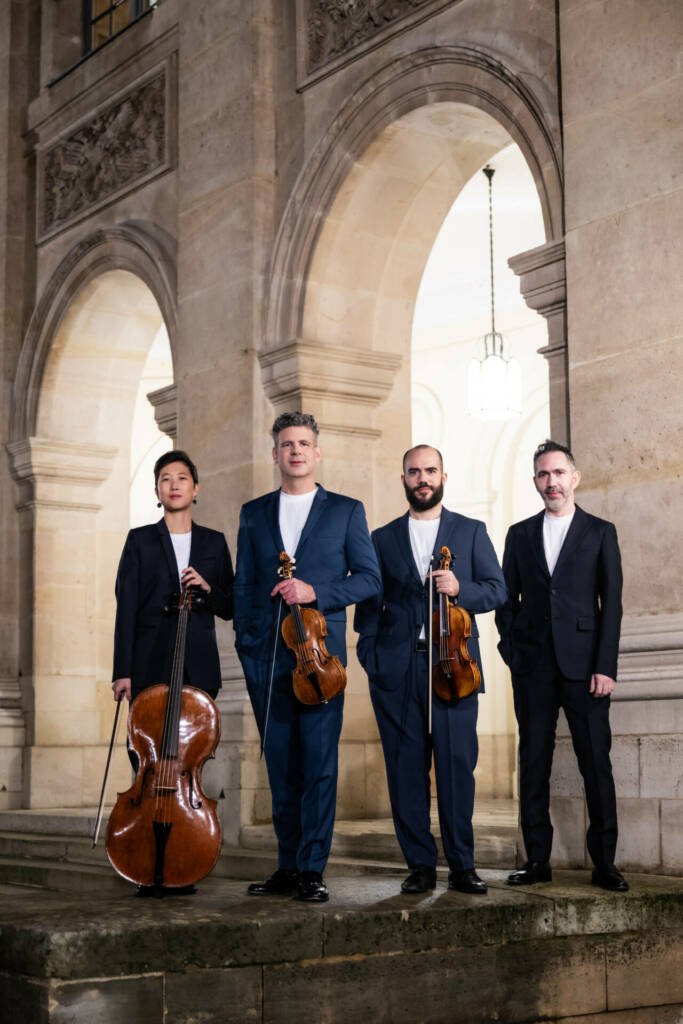
Ensemble Diderot
Johannes Pramsohler violin
Roldan Bernabé violin
Guilrim Choi cello
Philippe Grisvard harpsichord
 © Julien Benhamou